
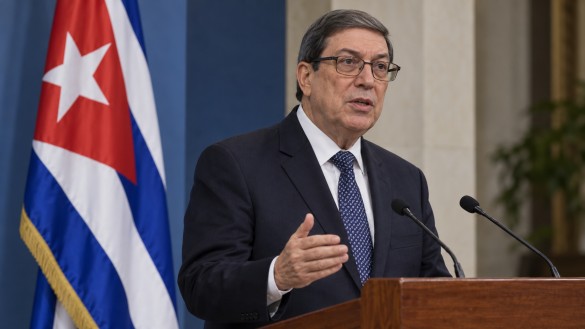
Cuban Foreign Minister Bruno Rodríguez has accused the United States of exerting political pressure and issuing economic threats to sway countries ahead of an upcoming United Nations General Assembly vote on a resolution to end the longstanding US trade embargo against Cuba. The resolution, titled “Necessity of Ending the Economic, Commercial and Financial Embargo Imposed by the United States of America Against Cuba,” is set for a vote on October 28, marking the 34th occasion the matter has been presented to the General Assembly.
Rodríguez claims that the US government has resorted to tactics such as threatening sanctions, punitive tariffs, visa restrictions, and the suspension of cooperation programs to deter other nations from supporting the resolution. He stressed that the vote is fundamentally about national sovereignty and the ability of countries to shape their own foreign policies without external coercion.
The resolution put forth this year also addresses the impact of specific fuel and energy restrictions imposed by the United States in January 2026, measures that Havana argues have compounded Cuba’s economic challenges. Rodríguez estimated that the US embargo has inflicted over $178.7 billion in economic losses on Cuba over six decades.
In January, former US President Donald Trump signed an executive order targeting countries and entities that supply fuel to Cuba, actions the Cuban government has characterized as an effort to further strain the island’s economy. This move underscores the persistent tension between the two nations, particularly in the economic sphere.
The previous year, a similar resolution introduced by Cuba at the UN General Assembly garnered 165 votes in favor, seven against, and 12 abstentions. The consistent international support reflects widespread opposition to the embargo, despite ongoing diplomatic efforts by the United States to maintain it.