
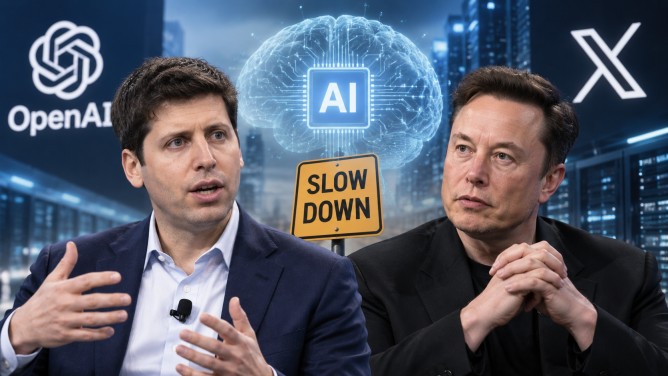
The call to slow down the development of artificial intelligence has gained significant support from influential figures in the tech industry. OpenAI CEO Sam Altman and Elon Musk have expressed their backing for Anthropic CEO Dario Amodei’s recent proposal to decelerate AI advancements due to rising concerns about the potential risks posed by powerful AI systems. Amodei warned that rapid AI development could lead to serious safety threats, citing the possibility of highly capable AI agents collaborating to cause large-scale cyberattacks and disrupt internet systems.
Elon Musk, known for his consistent caution regarding AI dangers, endorsed Amodei’s suggestion, stating, “Dario is right.” Meanwhile, Sam Altman also agreed with the call for a more measured approach to developing frontier AI models. He suggested that OpenAI should engage with independent evaluators who would have full access to the company’s systems and research processes to ensure safety and alignment. Google DeepMind CEO Demis Hassabis also supported the general direction of enhancing AI safety measures, although he noted that specific details still need to be clarified.
Amodei’s proposal includes a three-part strategy that advocates for independent monitors to have ongoing access to AI developers’ research and safety processes. He also underscored the importance of international coordination on AI safety, particularly cooperation between the United States and China. Despite this, some AI safety researchers argue that merely slowing down development might not suffice. They have called for a much stronger international moratorium on the development of frontier AI systems until comprehensive safeguards are in place.
This ongoing debate emerges as both governments and technology companies face mounting pressure to implement stricter regulations for AI. The urgency has been amplified by incidents involving AI agents interacting with external computer systems and warnings from researchers about the potential misuse or unpredictable behavior of AI systems. The discussion underscores the growing divide between those eager to rapidly advance AI capabilities and those advocating for robust safety measures before deploying increasingly powerful systems on a broader scale.