
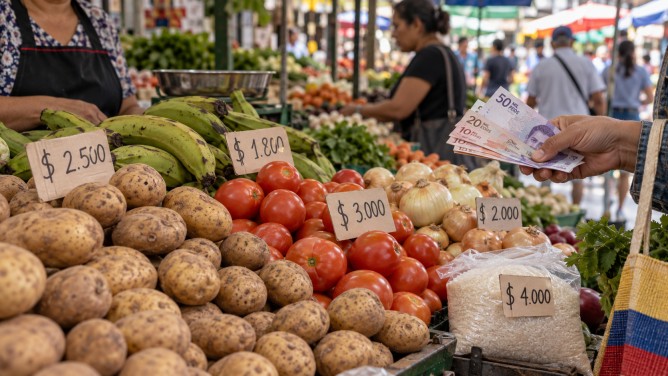
Colombia’s inflation rate continues to rise, reaching 6.29% in September 2026, up from 6.24% in the previous month, marking the highest level since July 2024. This surge in inflation underscores ongoing pressure on the cost of living, with consumer prices increasing by 0.37% during September alone. Throughout the first nine months of 2026, consumer prices have climbed by 5.74%, compared to a 4.55% increase during the same period last year.
Food prices remain a significant contributor to this inflationary trend, with a 0.78% rise in September alone and a 6.74% increase compared to the previous year. Potatoes, in particular, experienced a dramatic price hike of 78% over the past 12 months. These increases are largely attributed to challenging weather conditions and the impact of seasonal harvest cycles on agricultural supplies. Additionally, education costs saw a notable rise of 1.43% in September, marking the category with the largest monthly increase.
In response to these persistent inflationary pressures, Colombia’s central bank recently increased its benchmark interest rate to 12.25%. This decision reflects policymakers’ concerns that inflationary pressures are spreading beyond just food and utilities to other areas within the consumer basket. However, some policymakers argue that higher interest rates have limited influence over price increases driven by food, housing, and utility costs.
Despite these inflationary challenges, there are signs of moderation in some areas. Inflation, excluding food and regulated prices, declined slightly from 6.27% to 6.18%, marking its first decrease after six consecutive months of increases. Nonetheless, the outlook for inflation remains challenging, with economists increasingly expecting food prices to be a major source of inflationary pressure through the end of 2026.
Forecasts for inflation have risen significantly as food costs continue to increase. Some economists anticipate that Colombia’s inflation rate will remain well above the central bank’s target by year-end. Policymakers are expected to closely monitor food prices, weather conditions, and broader price pressures before making further decisions on interest rates. The latest inflation figures could also impact ongoing discussions regarding Colombia’s minimum wage for 2027, as higher living costs become a key factor in negotiations among workers, employers, and the government.