
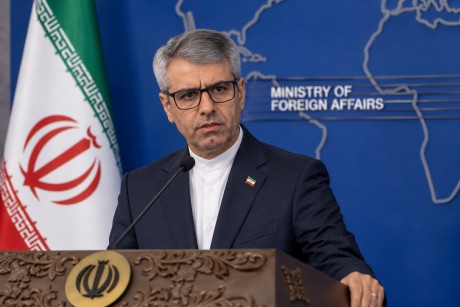
Iran has firmly denied any role in the ongoing conflict in Yemen, asserting that the Houthi forces are autonomous and make their own decisions. According to Iranian Foreign Ministry spokesman Esmaeil Baghaei, Tehran does not interfere in Yemeni matters and dismissed allegations linking Iran to the recent developments in the region involving Saudi Arabia and Yemen. Baghaei highlighted that the conflict stems from deep-rooted issues within Yemen itself.
In a related development, Baghaei confirmed that a meeting initially planned to take place in Oman, involving Iran and Gulf countries, had been postponed at the request of Saudi Arabia. The gathering was aimed at addressing regional security and fostering cooperation among the involved parties. Despite the delay, Baghaei mentioned that an understanding between Iran and Oman regarding maritime routes in the Strait of Hormuz had been reached, and the two nations would decide on the next steps.
Oman’s Foreign Minister Badr Albusaidi remarked that the postponement of the regional meeting was intended to support broader consensus. He reiterated Oman’s dedication to dialogue, regional stability, and fostering long-term cooperation among the countries in the region.
The talks in Oman were anticipated to serve as a platform for Iran and Oman to present their agreement on maritime navigation, which is crucial given the strategic importance of the Strait of Hormuz. Although the meeting has been delayed, the finalized understanding between Iran and Oman signifies a step forward in their bilateral relations, focusing on maritime security.
This development comes amid heightened tensions in the Gulf region, where security and cooperation remain pivotal issues. The diplomatic engagement between Iran, Oman, and other Gulf countries continues to be a critical component in efforts to stabilize the region and address the complex dynamics at play.