
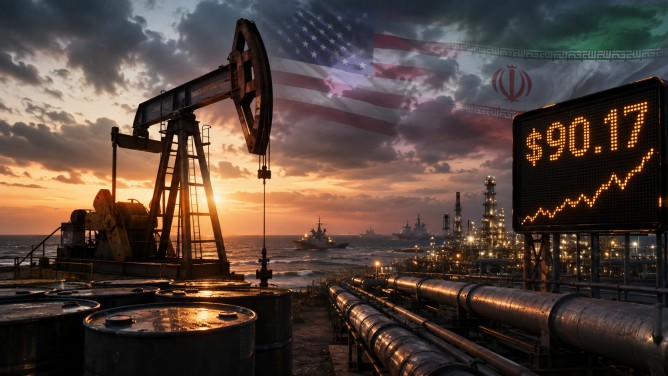
Oil prices have surged significantly following the lapse of a two-month negotiation period between the United States and Iran without reaching a peace agreement. This development has heightened concerns that the ongoing conflict may persist, potentially causing further disruptions to global energy supplies. The price of Brent crude has risen to over $90 a barrel, hitting approximately $91.63, marking its highest point since July 30.
The escalation in oil prices was partly fueled by U.S. President Donald Trump’s demand for Iran’s surrender, coupled with a warning that the conflict might escalate if diplomatic efforts do not succeed. Such tensions have raised fears about the security of the Strait of Hormuz, a vital corridor for global oil shipments. The number of commercial vessels navigating this strategic waterway has decreased markedly, amplifying concerns over possible prolonged disruptions to oil supplies.
Iran has hinted at the possibility of adopting a more aggressive military strategy should negotiations collapse. Reports of an attack on a cargo vessel transiting the Strait of Hormuz have further exacerbated worries regarding the safety of maritime activities in the region. This situation has led investors to brace for extended disruptions in oil supplies, which could exert additional upward pressure on crude oil prices if the strait faces closure or reduced traffic.
Analysts caution that the enduring conflict in the Middle East, alongside the ongoing war in Ukraine, could trigger further shocks to global energy markets. These developments are likely to lead to increased oil and gas prices, posing challenges for economies worldwide. As the situation unfolds, stakeholders remain vigilant in monitoring the potential impacts on energy supplies and market stability.