
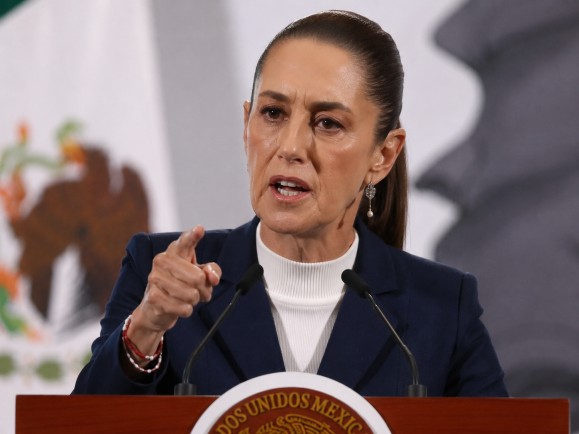
In the wake of a tragic incident involving the deaths of 17 Mexican citizens while under the custody of U.S. Immigration and Customs Enforcement (ICE), Mexico finds itself grappling with heightened political divisions. President Claudia Sheinbaum has made a public call for national unity, emphasizing the urgent need for collective action to safeguard the rights and safety of Mexican nationals abroad. Her appeal underscores the importance of setting aside domestic political disagreements in favor of a unified front in defending the nation’s citizens.
The Mexican government has outlined several measures in response to the situation, including the pursuit of international investigations and the support of legal proceedings in U.S. courts. Strengthening diplomatic efforts is also a key component of the strategy to offer better protection to Mexican citizens overseas. President Sheinbaum has urged political parties across the spectrum to come together in this endeavor, framing it as a cause that transcends partisan lines.
Despite the president’s plea, the call for unity has met resistance from opposition parties. The Institutional Revolutionary Party (PRI), in particular, has voiced its disapproval, criticizing the initiative as being driven by political motives rather than a genuine attempt at fostering national consensus. This response highlights the persistent political polarization in Mexico, even in matters that concern the welfare of its citizens beyond its borders.
The discord between the government and opposition parties reflects broader challenges within Mexico’s political landscape. While the protection of Mexican nationals should ideally be a unifying issue, the prevailing political tensions suggest otherwise. The situation not only underscores the complexity of international relations but also the intricate dynamics of domestic politics in Mexico.