
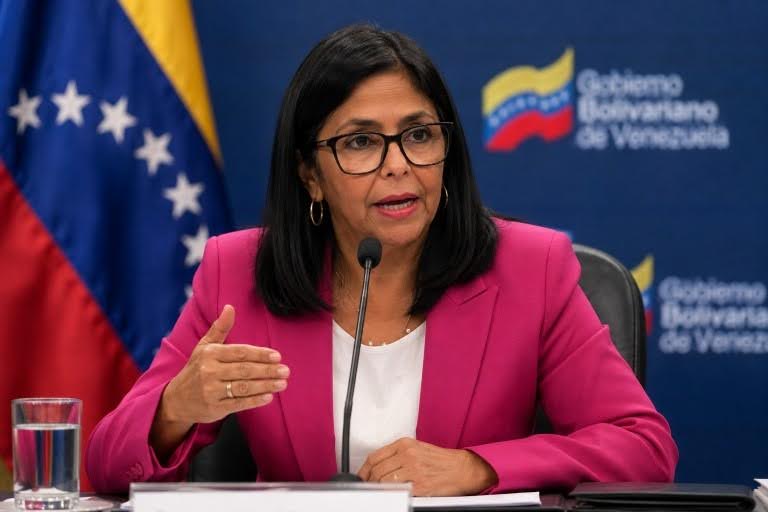
In a bold move to reshape Venezuela’s energy landscape, interim President Delcy Rodríguez has staunchly defended a new energy agreement with the United States, asserting that the country will maintain its sovereignty over its vast oil reserves. The deal, which has faced significant domestic criticism, was addressed by Rodríguez in a national speech aimed at dispelling worries that the agreement would hand over control of national resources to the US. She highlighted the prospective benefits, emphasizing the potential to generate an impressive $209 billion in revenue and propel Venezuela into the ranks of major global energy producers. According to Rodríguez, without essential investment, technology, and infrastructure, the country’s extensive underground oil reserves cannot be effectively transformed into tangible economic growth for its citizens.
Details of the agreement, which reportedly were ironed out in private over several months, suggest that it grants the US a significant stake in Venezuela’s crude oil reserves. These reserves are the largest proven in the world, surpassing those of oil giants like Saudi Arabia and Iran. Rodríguez disclosed that the deal encompasses 17 key oilfields, aiming for a production target of over 1.5 million barrels per day. However, this announcement has sparked a wave of opposition, both from political adversaries and dissenters within Rodríguez’s own party. Critics have derided the agreement as a plundering of national resources, with a former state oil executive labeling it a historical betrayal of sovereignty. Demonstrations erupted in Caracas, where protesters decried the perceived foreign incursion, while social media buzzed with satire about rebranding the state oil company.
The agreement represents a significant policy shift for Rodríguez and her political allies, who have traditionally championed a stance against foreign dominion over Venezuela’s natural wealth. Rodríguez’s previous public declarations have warned against such arrangements, marking this deal as a notable reversal in her rhetoric. Opposition leaders are voicing apprehensions that this partnership could jeopardize efforts to reinstate democratic elections in Venezuela, with the timeline for future voting still uncertain. They argue that lasting economic progress hinges on transparent governance and the assurance of free elections, without which the deal could rest on shaky ground.